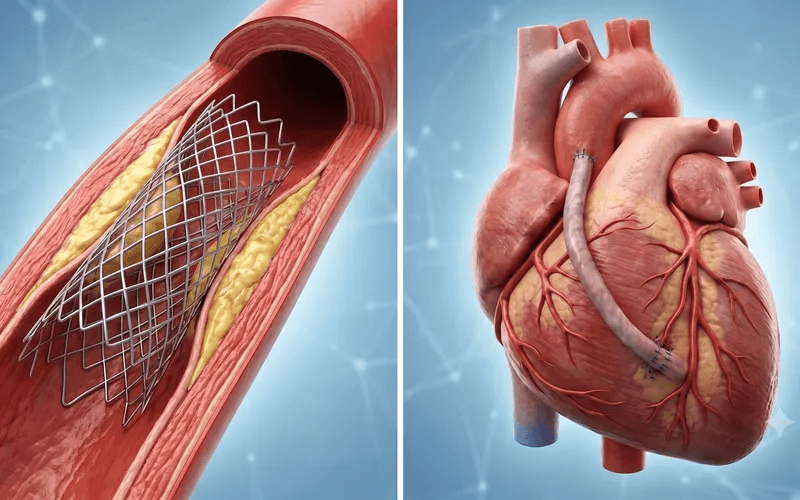
Heart Surgery
8 min read
Angioplasty vs. Bypass Surgery: Which Is Right for You?
READ MORE

Is bypass open heart surgery? Cardiac surgeon Dr Amjad Shaikh explains how the two terms differ, and when bypass is done without cutting the breastbone.

By Dr. Amjad Shaikh, M.Ch (CVTS)
Cardiovascular & Thoracic SurgeonLast reviewed 12 October 2026How we create our content
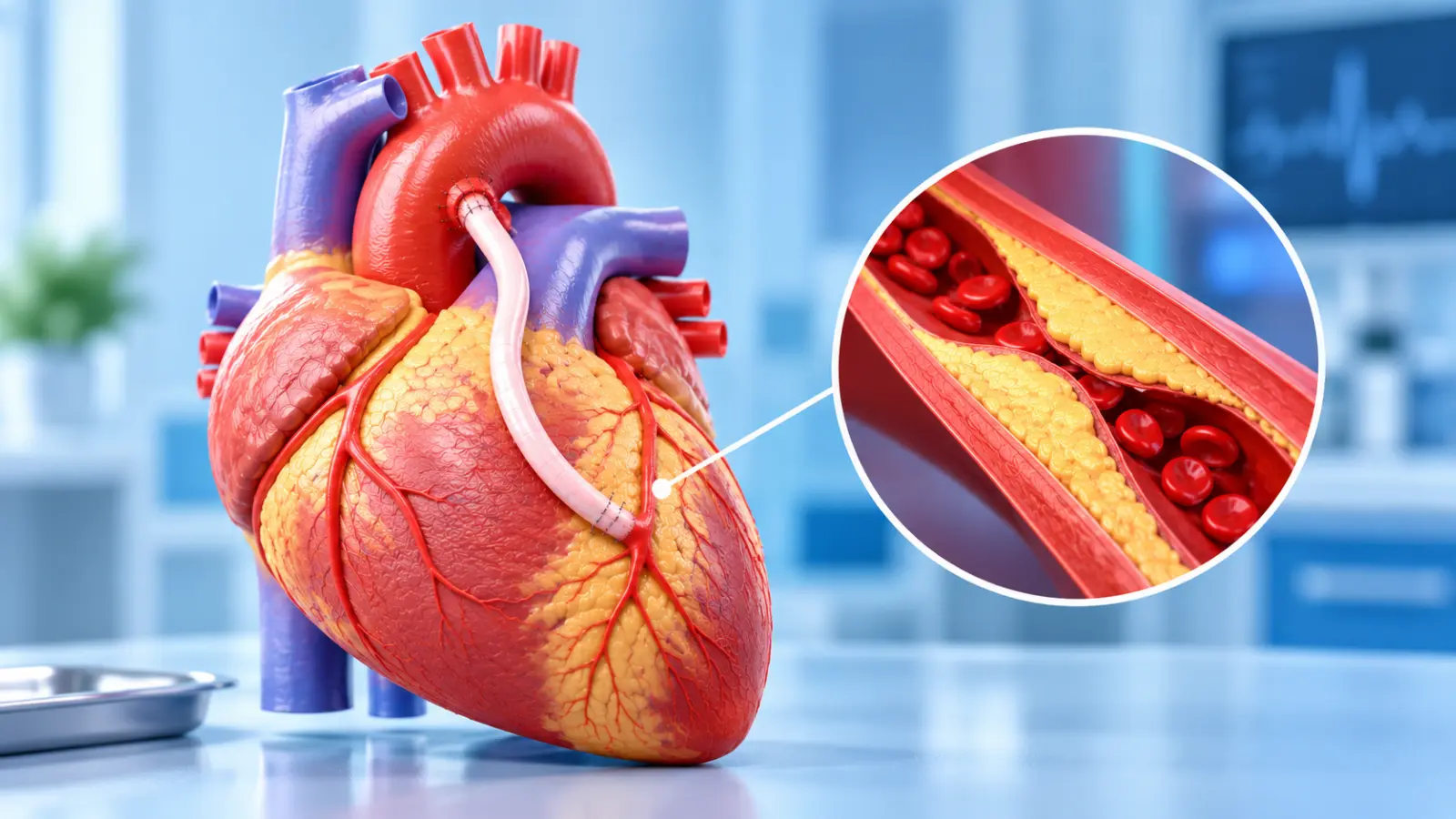
Is bypass surgery open heart surgery? It depends on how the bypass is done. When the surgeon cuts through the breastbone to reach the heart, which is the conventional approach, bypass is open heart surgery in the everyday sense of the term. Bypass can also be done through a small incision between the ribs, without cutting the breastbone. So the two terms do not mean the same thing: “open heart surgery” describes how the heart is reached. Bypass surgery is the name of one specific operation, which carries blood past a blocked artery of the heart [2].
“Open heart surgery” is an everyday description. The US National Library of Medicine’s medical vocabulary lists operations on the heart under “Cardiac Surgical Procedures”, and “open heart surgery” is not among the terms listed under that heading [1].
When I speak of conventional open-heart surgery, I mean the operation in which the breastbone (the sternum) is cut and the chest is opened to reach the heart. That is why the question has no one-word answer: a bypass done this way is open heart surgery in the everyday sense, and a bypass done without cutting the breastbone is not.
Bypass surgery works like a bypass road around a blocked highway.
The heart is a muscle, and like every muscle it needs its own blood supply, carried by its arteries. Over time, conditions such as high cholesterol and diabetes can narrow these arteries, which can cause chest pain and breathlessness. Bypass surgery aims to improve the blood supply to the heart muscle beyond the narrowing.
In medical terms, coronary artery bypass grafting (CABG) uses a graft to carry blood to the heart artery beyond the blockage [2]. The graft may be a section of vein or an internal mammary artery, among other options [2]. Whether bypass is the right treatment, and when, depends on a clinical assessment of your own heart.
More detail is on the bypass surgery (CABG) page.
People often compare these as if they were two options; they are not. The table shows what each term means.
| Open heart surgery | Bypass surgery (CABG) | |
|---|---|---|
| What it is | An everyday description: an operation in which the breastbone is cut to reach the heart | One specific operation that carries blood past a blocked coronary artery [2] |
| The name of one specific operation? | Not among the terms listed under the medical heading for heart operations [1] | Yes [2] |
| Does it involve cutting the breastbone? | In everyday use, yes: that is what “open” refers to | Not always. The conventional approach does; when bypass is done through a small incision between the ribs, the breastbone is not cut |
| Read more | Other heart operations: heart valve surgery · aortic surgery | Bypass surgery (CABG) · Minimally invasive cardiac surgery |
No. A bypass operation can differ in two ways: how the surgeon reaches the heart, and whether the heart is stopped or kept beating.
How the surgeon reaches the heart
Whether the heart is stopped
Minimally invasive bypass is not one single technique, and what can be done this way depends on the individual case. One option among several is minimally invasive direct bypass (MIDCAB), used in hybrid treatment, which combines a bypass graft with catheter treatment (PCI) of the other arteries [4]. In this hybrid approach, the graft to an artery on the front of the heart (the LAD) can be done through a small cut on the left side of the chest, without cutting the breastbone [4]. How catheter treatment (angioplasty) compares with bypass is explained in Angioplasty vs Bypass Surgery. Robotic-assisted bypass is another minimally invasive technique: instead of holding the instruments directly, the surgeon operates them through a robotic system. Where the coronary disease is extensive and diffuse, I generally prefer the conventional approach through the breastbone.
Which approach is used depends on the patient and the pattern of the disease. The types of bypass are described in more detail on the bypass surgery (CABG) page and the minimally invasive cardiac surgery page.
“Which is more dangerous, bypass or open heart surgery?” cannot be answered as it is asked, because the two terms describe different things. Any comparison of risk has to name a specific operation, a specific approach and a specific patient, and risk should not be judged from the size of the incision alone.
What matters is the patient’s own health: for example age, kidney function, lung disease, mobility and any previous heart surgery [5]. The condition of the heart matters too, and so does the operation itself, including how urgent it is and how extensive [5]. Surgeons bring such factors together in risk scores, such as EuroSCORE II [5]. US guidelines on treating narrowed or blocked heart arteries state that these decisions are based on the complexity of the disease, the technical feasibility of treatment and a Heart Team discussion [6].
In my practice, no single type of operation is right for everyone. The options depend on the patient’s disease and fitness for each procedure, and they are discussed with the patient. Your own cardiac surgeon can explain the risks in your case. The risks of bypass surgery are also described on the bypass surgery (CABG) page.
Is CABG open heart surgery? CABG is the medical name for bypass surgery [2]. When it is done by cutting the breastbone, it is open heart surgery in the everyday sense; when it is done through a small incision between the ribs, the breastbone is not cut.
Is open heart surgery the same as bypass surgery? No. “Open heart surgery” describes how the heart is reached, through the cut breastbone. Bypass is the name of one specific operation [2]. The table above sets out the difference.
Does bypass always mean cutting the breastbone? No. The conventional approach does. In minimally invasive bypass, the operation is done through a small incision between the ribs without cutting the breastbone. Whether the heart is stopped is covered in the next question.
Is the heart stopped during bypass? Sometimes. In the traditional technique, the heart is stopped and supported by a heart-lung machine. In beating-heart (off-pump) bypass, the heart keeps beating and no heart-lung machine is used [3]. Some complex cases still need the machine.
Which is more dangerous, bypass or open heart surgery? The question cannot be answered as asked, because the two terms describe different things. Risk depends on the specific operation and on the patient [5]. See What actually decides the risk of heart surgery? above.
If you have been told you need bypass surgery, ask your cardiac surgeon which approach is being planned for you, and why. If you are unsure about the approach recommended, it is reasonable to ask for a second opinion from another qualified cardiac surgeon. Related reading: Angioplasty vs Bypass Surgery · Life After Bypass Surgery · FAQs.
This article is for general information. It does not replace advice about your own condition from a qualified cardiac surgeon.

Dr. Amjad Shaikh reviews, corrects and approves every article published in his name. Read our editorial policy
Cardiovascular & Thoracic Surgeon
M.Ch (CVTS), M.S., FMAS (Fellowship in Minimal Access Surgery), MBBS
Dr. Amjad Shaikh is an experienced cardiac surgeon in Mumbai with over 15 years of experience, specialising in heart bypass surgery, beating-heart CABG, valve repair and replacement, minimally invasive cardiac surgery, and heart transplants. He has been involved in 5,000+ cardiac surgical cases, including complex, high-risk cases.