
TAVI / TAVR in Mumbai: A Cardiac Surgeon's Perspective
Advanced non-surgical aortic valve implantation through a catheter, ideal for high-risk and elderly patients.

By Dr. Amjad Shaikh, M.Ch (CVTS)
Cardiovascular & Thoracic SurgeonLast reviewed 15 October 2026How we create our content
Overview
If you or a parent has been told the aortic valve is severely narrowed, you've probably heard two very different options — a valve fitted through a catheter in the leg (TAVI), or open-heart surgery. And you may have noticed that the answer you get seems to depend on which specialist you ask. Let me offer you something different: the view of a surgeon who performs both.
TAVI — transcatheter aortic valve implantation, also called TAVR — replaces a diseased aortic valve without opening the chest or stopping the heart. Because I do both TAVI and open valve surgery, I have no reason to steer you towards one or the other. My only job is to work out which is genuinely right for your heart.
What Is TAVI, and What It Treats
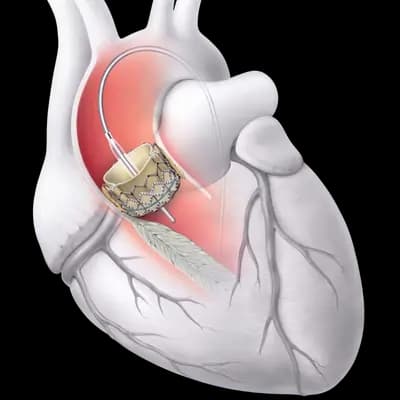
TAVI is a way to replace the aortic valve from the inside. Instead of opening the chest, I guide a new tissue valve — mounted on a small frame — up through the artery in the leg and position it inside the old, diseased valve, where it immediately takes over the job. For the right patient, it means a shorter hospital stay and a much faster recovery than open surgery.
The condition it treats most often is severe aortic stenosis — a narrowing of the aortic valve that forces the heart to strain against a smaller and smaller opening. Over time that causes breathlessness, chest tightness, giddiness, and fatigue, and once it becomes severe and symptomatic it is genuinely dangerous if left untreated. Replacing the valve relieves the obstruction and protects the heart. TAVI is also increasingly used to treat a worn-out tissue valve from a previous surgery — a valve-in-valve procedure.
Why a Cardiac Surgeon's View Matters in TAVI
TAVI is often associated with interventional cardiology, and cardiologists do superb work. But the safest, most balanced valve care comes from a Heart Team — a cardiac surgeon and an interventional cardiologist reviewing your case together — and having a surgeon in that room matters for three practical reasons:
- Unbiased advice. Because I can perform either operation, my recommendation is based on what's best for your heart, not on the only tool I carry.
- A surgical safety net. The safest TAVI programmes are built around a team with a cardiac surgeon present. In the rare event of a complication during the procedure, surgical expertise and backup are immediately on hand.
- The full journey. From standard TAVI to alternative access routes, complex anatomy, and future valve-in-valve procedures — and the moments when open surgery is genuinely the better choice — a surgeon can manage the whole path.
How the Procedure Works
TAVI is done in a cath lab or a hybrid operating theatre. I pass a catheter through the femoral artery in the leg and guide the new valve up to the heart, where it's deployed inside the diseased valve under X-ray guidance. The new valve takes over immediately. In many cases general anaesthesia isn't needed, and patients often go home in about three days. When the leg artery isn't suitable, a surgeon can use an alternative access route to deliver the valve safely — another reason surgical involvement helps.
Who Is a Candidate for TAVI?
TAVI is especially valuable for patients with severe aortic stenosis who face higher risk from open surgery — often older patients (frequently over 70), those unfit for conventional surgery, or those with other serious conditions such as lung disease or cancer. The evidence has steadily widened who can be considered, but the final call always rests with the Heart Team after assessing the heart, the valve anatomy, and the patient's overall health.
Supporting evidence: In the PARTNER 3 trial (1,000 low-risk patients; Mack et al., NEJM 2019), TAVI had a lower rate of death, stroke or rehospitalisation than surgery at one year (8.5% vs 15.1%). Valve durability matters over the longer term, particularly for younger patients — PARTNER 3 trial (NEJM 2019)
TAVI vs. Open Surgery (SAVR): An Honest Comparison
Because I perform both, I can lay these out side by side without a thumb on the scale. Neither is universally better — they're better for different patients.
The Benefits of TAVI
For the right patient, the advantages are real and immediate: no chest incision and no divided breastbone, no need to stop the heart, often no general anaesthesia, a hospital stay of around three days, and a quick return to normal life. For an older or frailer patient who would find open surgery a hard road, that gentler path can be the difference between having the valve treated and not.
The Risks, Honestly
TAVI is generally very safe, but I always discuss its considerations plainly. Only tissue valves can be used, so long-term durability is a genuine factor — one of the main reasons I may still favour surgery for a younger patient. There's a higher chance of needing a permanent pacemaker afterwards than with open surgery, and the valve and procedure cost considerably more. As with any valve procedure, there are small risks related to the blood vessels, bleeding, or the valve's position. Weighing all of this against the benefits is precisely what the Heart Team assessment is designed to do.
Recovery After TAVI
Fast recovery is one of TAVI's biggest attractions. Most patients are encouraged to move about soon after the procedure, spend only a few days with us, and return to their normal routine quickly — far sooner than after open surgery. Good blood-pressure control and regular follow-up help make the result last.
TAVI Recovery Roadmap
Life After TAVI
Most patients feel a marked improvement in breathlessness and energy once the narrowed valve is relieved — it can be quite dramatic. Long-term care is straightforward: regular follow-up with echocardiograms to monitor the new valve, good control of blood pressure and other risk factors, and staying active. Because TAVI uses a tissue valve, you generally won't need lifelong blood thinners the way a mechanical valve requires — though I'll always advise you on the right medication for your situation.
What Affects the Cost in Mumbai
The cost of treatment is not one fixed figure. It depends on you, on the treatment you need and on where you are treated. The main factors are:
- Hospital category. Charges differ between hospitals, for example between a large multi-speciality hospital and a smaller centre.
- Room type. A general ward, a semi-private room, a private room and a suite are charged differently, and so is time in intensive care.
- The graft, valve, device or implant used. The type used in your treatment can change the cost, for example the grafts used in bypass surgery, the valve chosen in valve surgery and TAVI, or the stent-graft used in some aortic repairs.
- Your condition and the treatment you need. A single planned treatment and a combined or more complex one are not priced alike.
- Length of hospital stay. A longer stay adds to the total.
- Tests and medicines. Investigations and medicines before, during and after the stay add to the total.
- Insurance and cashless admission. Whether your policy covers the procedure, what limits it sets, and whether the hospital offers cashless admission with your insurer, all affect what you pay yourself.
Because these factors are specific to each patient, a fair estimate is only possible after an evaluation, so no figure is given on this page. Ask the hospital for an itemised estimate before admission, and check with your insurer what your policy covers.
Frequently Asked Questions
Common clinical queries regarding the procedure and recovery.
No — TAVI replaces the valve through a catheter, without opening the chest or stopping the heart, which is why recovery is so much faster.
It depends on your age, valve anatomy, and overall health, and is best decided by a Heart Team. Seeing a surgeon who performs both gives you a genuinely balanced recommendation.
Most patients go home in about three days and return to routine quickly — much sooner than after open surgery.
Some patients do — the chance is higher than with open surgery. Your heart rhythm is watched closely afterwards so this can be managed if needed.
TAVI uses a tissue valve, so durability is an important consideration, particularly for younger patients — one reason surgery is sometimes preferred. I'll discuss what suits your situation.
Because it's a tissue valve, lifelong anticoagulation generally isn't required the way it is with a mechanical valve — though I'll advise on the right medication for you.
Disclaimer: This guide is for general education and awareness and is not a substitute for professional medical advice. Please consult a qualified cardiac surgeon for guidance specific to your condition. If you'd like an expert opinion, you can consult Dr. Amjad Shaikh, a cardiac surgeon in Mumbai.
Need a second opinion before TAVI Procedure?
Dr. Amjad Shaikh reviews, corrects and approves every article published in his name. Read our editorial policy
Dr. Amjad Shaikh
Cardiovascular & Thoracic Surgeon
M.Ch (CVTS), M.S., FMAS (Fellowship in Minimal Access Surgery), MBBS
Dr. Amjad Shaikh is an experienced cardiac surgeon in Mumbai with over 15 years of experience, specialising in heart bypass surgery, beating-heart CABG, valve repair and replacement, minimally invasive cardiac surgery, and heart transplants. He has been involved in 5,000+ cardiac surgical cases, including complex, high-risk cases.