
Aortic Aneurysm & Aortic Surgery in Mumbai: A Surgeon's Guide
Comprehensive surgical care for aortic aneurysms and disease, repairing weakened vessels before they become critical.

By Dr. Amjad Shaikh, M.Ch (CVTS)
Cardiovascular & Thoracic SurgeonLast reviewed 22 July 2026How we create our content
Overview
If a scan has picked up an aortic aneurysm, you've probably been handed a frightening word with very little explanation. Let me talk you through it the way I would in my clinic — calmly, and honestly.
The aorta is the body's largest artery, the main pipe carrying blood from the heart out to everything else. An aneurysm is a weakened, ballooning section of that pipe. As it stretches, the wall thins and grows more fragile — and if it tears or bursts, it becomes one of the true emergencies in my field. My job, most of the time, is to repair that weak section long before it ever reaches that point.
The Aorta, and the Different Aneurysms
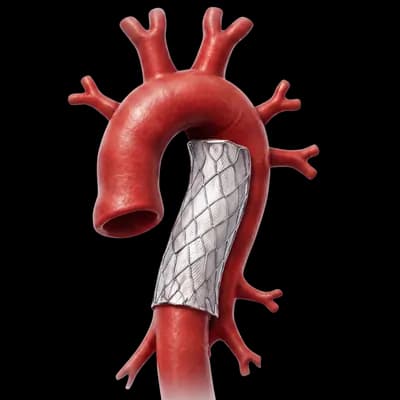
The aorta runs a long path — up out of the heart, arching over, then down through the chest and into the abdomen. An aneurysm can form anywhere along it, and where it sits shapes everything about how I treat it:
- Thoracic aortic aneurysm (TAA) — in the part within the chest, including the aortic root and the ascending aorta closest to the heart.
- Abdominal aortic aneurysm (AAA) — in the section running through the abdomen. This is the most common location.
- Thoracoabdominal aneurysm — one that stretches across both the chest and the abdomen.
There's also a close cousin I have to mention: aortic dissection, where the inner lining of the wall tears and the layers split apart. That's a different, more urgent problem — and I'll come back to it.
What Weakens the Aorta
An aneurysm forms when the aortic wall gives way over time, and several things push it in that direction: long-standing high blood pressure, hardening of the arteries, smoking, and simply getting older. Family history matters too — aortic disease runs in some families. And a group of my patients are born with the risk: inherited conditions like Marfan or Loeys-Dietz syndrome, or a bicuspid aortic valve, can weaken the aorta earlier in life, which is why I take a young patient with a family history very seriously. Less often, injury or infection is the cause.
The Warning Signs — and Why This Is a Silent Disease
Here's the hard truth about aneurysms: most cause no symptoms at all. I meet many patients whose aneurysm turned up by pure chance on a scan done for something else entirely. When symptoms do appear, they depend on where the aneurysm sits — chest, back, or abdominal pain, a pulsing feeling in the belly, hoarseness, or trouble swallowing or breathing if it presses on nearby structures.
Call an ambulance immediately if there's sudden, severe, tearing pain in the chest, back, or abdomen, fainting, or a sudden sense that something is catastrophically wrong. This can mean a rupture or dissection — it is life-threatening and every minute counts.
How I Diagnose It
Because aneurysms are so quiet, imaging does the talking. For the abdominal aorta, a simple ultrasound is a quick, effective way to find and then monitor an aneurysm. When I'm planning surgery, the CT angiogram is my most important tool — it gives me a precise, three-dimensional map of the aneurysm's size, shape, and exact location. An MRI can do a similar job, and an echocardiogram helps me assess the aortic root and the heart valves. These findings are what tell me whether we watch, or whether we operate.
When Does an Aneurysm Actually Need Surgery?
This is the question every patient asks, and the answer is reassuring: not every aneurysm needs an operation. Many are small and stable, and the right thing to do is watch them carefully with regular scans while controlling blood pressure. I move towards surgery when the aneurysm reaches a certain size, grows quickly, starts causing symptoms, or when there's a dissection or rupture.
As a general guide, I consider repairing an ascending thoracic aneurysm once it reaches around 5.5 cm — and sometimes sooner in the right hands, or earlier still in patients with a connective-tissue condition or a bicuspid valve. An abdominal aneurysm is judged on similar size and growth thresholds. But these numbers are a starting point, not a rule; the decision is always personal.
Supporting evidence: The 2022 ACC/AHA Aortic Disease Guideline recommends surgery for sporadic aortic root or ascending aneurysms at a diameter of about 5.5 cm (and as low as 5.0 cm at experienced centres with a multidisciplinary aortic team), for rapid growth, or for symptoms — 2022 ACC/AHA Aortic Disease Guideline (Circulation)
How I Repair the Aorta
Open surgical repair
In an open repair, I remove the weakened section of aorta and replace it with a durable synthetic graft — a permanent, definitive fix. When the aneurysm involves the aortic root or valve, I may combine this with a valve procedure, which I'll describe in a moment.
Endovascular repair (EVAR / TEVAR)
For suitable patients, I can reinforce the aorta from the inside without a large incision. I guide a stent-graft up through a small cut at the groin and position it inside the aorta under X-ray, sealing off the weak section from within. We call this EVAR in the abdomen and TEVAR in the chest. It means a much faster recovery, which makes it especially valuable for older or higher-risk patients — though it depends on the anatomy, and it commits the patient to lifelong imaging follow-up.
Hybrid procedures
For some complex cases, particularly around the aortic arch, the safest repair combines open and endovascular techniques in a single hybrid approach.
Aortic Root Procedures: Bentall and David's
When the aneurysm involves the aortic root — the very beginning of the aorta, where it meets the valve — the operation becomes more intricate, and this is some of the work I find most rewarding.
In the Bentall procedure, I replace the aortic valve, the root, and the ascending aorta together with a valve-graft, carefully detaching and then reattaching the two coronary arteries. In the valve-sparing David's procedure, I replace the diseased root but preserve the patient's own aortic valve — which spares them a lifetime of blood-thinning medication.
When It's an Emergency: Rupture and Dissection
A ruptured aneurysm or an acute aortic dissection is a race against the clock, and it is exactly the situation the warning signs earlier are meant to catch. Here, the priority is simple and urgent: reach the patient's aorta and repair or reinforce the tear as fast as possible. Outcomes are far better when treatment starts early — which is why recognising that tearing pain and getting to a hospital without delay can be the difference between life and death.
The Risks, Honestly
Aortic surgery is highly effective, but because it involves the body's main artery, it's major surgery and I'm always straight with patients about the risks — bleeding, stroke, effects on the kidneys, and, in complex cases, spinal-cord complications. Endovascular repair is gentler in the short term but commits the patient to lifelong monitoring, to be sure the stent-graft stays sealed and in position. What matters most for a safe outcome is careful planning, an experienced team, and — above all — treating the aneurysm in good time rather than in crisis.
Recovery
How you recover depends heavily on which repair you had. After an endovascular repair, many patients are up within a day or two and home within a few days, back to routine over a few weeks. Open surgery asks more of the body, with a longer hospital stay and a recovery measured in weeks to a few months. In both cases, controlling blood pressure and keeping up with follow-up scans are central to a lasting result.
Recovery Roadmap: Open vs. Endovascular
Life After Aortic Surgery
With timely surgery and good follow-up, most of my patients return to a full and active life. The long-term work is straightforward but important: keep blood pressure well controlled, don't smoke, stay active, and attend the follow-up scans — especially after a stent-graft, where lifelong surveillance makes sure it keeps doing its job. And if your aortic disease is the inherited kind, I'll usually recommend screening for close family members too, because catching it early in them is the whole point.
What Affects the Cost in Mumbai
The cost of treatment is not one fixed figure. It depends on you, on the treatment you need and on where you are treated. The main factors are:
- Hospital category. Charges differ between hospitals, for example between a large multi-speciality hospital and a smaller centre.
- Room type. A general ward, a semi-private room, a private room and a suite are charged differently, and so is time in intensive care.
- The graft, valve, device or implant used. The type used in your treatment can change the cost, for example the grafts used in bypass surgery, the valve chosen in valve surgery and TAVI, or the stent-graft used in some aortic repairs.
- Your condition and the treatment you need. A single planned treatment and a combined or more complex one are not priced alike.
- Length of hospital stay. A longer stay adds to the total.
- Tests and medicines. Investigations and medicines before, during and after the stay add to the total.
- Insurance and cashless admission. Whether your policy covers the procedure, what limits it sets, and whether the hospital offers cashless admission with your insurer, all affect what you pay yourself.
Because these factors are specific to each patient, a fair estimate is only possible after an evaluation, so no figure is given on this page. Ask the hospital for an itemised estimate before admission, and check with your insurer what your policy covers.
Frequently Asked Questions
Common clinical queries regarding the procedure and recovery.
It can be. Many grow slowly and are safely watched, but a large or fast-growing one can rupture or dissect, which is life-threatening — that's why timely repair matters.
Often not — aneurysms are usually silent and found by chance on a scan. That's why people with risk factors, or a family history, may benefit from screening.
Neither is universally better. A stent-graft suits many older or higher-risk patients and means faster recovery; open surgery may be better for younger patients or complex anatomy. It depends on your aneurysm and your health.
After an endovascular repair, often just a few weeks. After open surgery, several weeks to a few months.
Yes — especially after a stent-graft, which needs regular surveillance scans for life to confirm it stays well positioned and sealed.
Not always, but controlling blood pressure, not smoking, and managing cholesterol lower the risk. If aortic disease runs in your family, tell your doctor.
Disclaimer: This guide is for general education and awareness and is not a substitute for professional medical advice. Please consult a qualified cardiac surgeon for guidance specific to your condition. If you'd like an expert opinion, you can consult Dr. Amjad Shaikh, a cardiac surgeon in Mumbai.
Need a second opinion before Aortic Surgery?
Dr. Amjad Shaikh reviews, corrects and approves every article published in his name. Read our editorial policy
Dr. Amjad Shaikh
Cardiovascular & Thoracic Surgeon
M.Ch (CVTS), M.S., FMAS (Fellowship in Minimal Access Surgery), MBBS
Dr. Amjad Shaikh is an experienced cardiac surgeon in Mumbai with over 15 years of experience, specialising in heart bypass surgery, beating-heart CABG, valve repair and replacement, minimally invasive cardiac surgery, and heart transplants. He has been involved in 5,000+ cardiac surgical cases, including complex, high-risk cases.