
Minimally Invasive Cardiac Surgery (MICS) in Mumbai
Minimally invasive heart surgery through small incisions, offering less pain, minimal scarring, and faster healing.

By Dr. Amjad Shaikh, M.Ch (CVTS)
Cardiovascular & Thoracic SurgeonLast reviewed 15 October 2026How we create our content
Overview
When patients hear “heart surgery,” they picture the big scar down the middle of the chest — and understandably, it frightens them. So let me start with some good news. For many operations, I no longer need to open the chest that way at all.
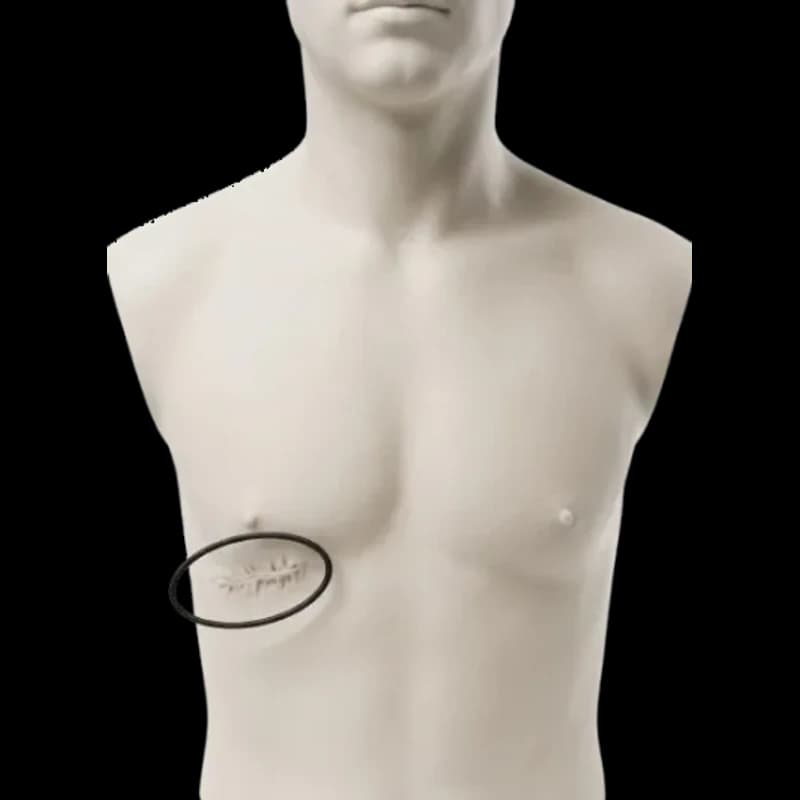
Minimally invasive cardiac surgery, or MICS, lets me do complex heart operations through a small cut of just 2 to 3 inches on the side or below the chest, without ever dividing the breastbone. Instead of splitting the bone, I reach the heart by gently parting the muscle between the ribs. Over the last decade this has changed my practice profoundly: smaller scars, far less pain, and a recovery measured in days rather than months — and, crucially, the same result on the heart itself.
The misconception I correct most often:
MICS means a smaller cut — no bone is divided, we simply go through the soft tissue between the ribs. It's a less morbid surgery, but the operation inside remains exactly the same: whether I go through the sternum or minimally invasively, what I do to the heart doesn't change. It works very well for valve surgery, for holes in the heart like ASD and VSD, and for the right bypass patients too.
Why Hearts Get Into Trouble
Your heart never rests. Day and night it fills with blood, works with the lungs to load it with oxygen, and pumps it out to every part of you. It's relentless work — and modern life makes it harder, with poor diets, broken sleep, long desk hours, and too little exercise all adding to the load.
Over time, that strain shows up as disease of the arteries or the valves — the structures that keep blood flowing the right way through the heart's chambers. It can leave you breathless, cause chest pain, throw the rhythm off, or form clots, and left alone it can turn dangerous. The reassuring part is that many of these problems can now be fixed through a minimally invasive approach.
Open-Heart Surgery vs. MICS, Side by Side
For decades, all of this meant opening the chest and dividing the breastbone. MICS gets the same job done through much smaller openings. Here's how they compare for you, the patient:
What I Can Treat This Way
Minimally invasive techniques cover a surprisingly wide range of heart conditions:
- Coronary artery disease (blocked heart arteries)
- Mitral valve disease (narrowing or leakage)
- Aortic valve disease (narrowing, leakage, or a bicuspid valve)
- Holes in the heart, such as ASD and VSD
- Aortic root and ascending aorta disease (aneurysm or wall weakness)
The Operations I Perform Minimally Invasively
Minimally invasive bypass (MICS CABG)
The coronary arteries feed the heart muscle, and when plaque blocks them the muscle suffers. In a bypass, I build a new route around the blockage using a healthy vessel from your own body — and when I can do that through small incisions, without touching the breastbone, it's called MICS CABG. [Link: Coronary Artery Bypass Surgery (CABG)]
Mitral valve repair & replacement
The mitral valve sits on the left side of the heart, between the upper and lower chambers. When it goes loose and stops controlling flow, it needs repair; when it's severely loose or hardened, replacement. Both can often be done minimally invasively. [Link: Valve Replacement & Repair]
Aortic valve repair & replacement
The aortic valve guards the exit from the heart into the aorta. It may need repair when it stretches or leaks, and replacement when it's badly damaged, hardened, or born with two cusps instead of three. [Link: Valve Replacement & Repair]
Holes in the heart (ASD / VSD)
A hole in the wall between the chambers — an atrial or ventricular septal defect — can often be closed from the side of the chest. That's a real advantage for younger patients, for reasons I'll come to below.
Aortic root procedures (Bentall & David's)
Complex root operations like the Bentall and the valve-sparing David's procedure can also be done in selected cases. I've explained these in full on our [Link: Aortic Aneurysm Repair] page.
What MICS really is:
MICS isn't about doing a smaller operation — it's the same complete operation through a smaller opening. Whether a patient is suitable depends on their heart and vessels, and that judgement is where experience matters most.
Are You a Candidate? This Is the Crucial Part
I want to be straight with you: MICS is a wonderful option, but it is not for everyone. Getting the selection right is the single most important decision I make — more important than the operation itself. The wrong patient in a minimally invasive operation is a patient put at risk.
How I decide yes or no:
I select patients very carefully. First I check the general condition — can they tolerate it? Because minimally invasive surgery is done on one-lung ventilation, I check lung capacity with a pulmonary function test. If there's old or healed tuberculosis and the lung is damaged or stuck, I avoid MICS. I also avoid it when the ejection fraction is very low, below 30%, or in very high-risk situations like a recent heart attack or significant left main disease of 50–60%. For those patients, open surgery is the safest choice.
For a bypass, MICS suits someone with straightforward triple-vessel disease and a well-functioning heart; when the blockages are many and diffuse, open surgery is usually safer. Beyond that, I can often treat several blockages in one MICS sitting; my diabetic patients benefit especially from the low infection risk of the small incisions; and smokers can sometimes still have it, once I've checked the lungs — occasionally with a chest specialist's help.
Supporting evidence: A regional analysis of 139 minimally invasive and 278 open bypass patients (Teman et al., Ann Thorac Surg 2021) found no difference in operative mortality or major complications, with fewer transfusions and shorter ICU and hospital stays after MICS. In the randomised MIST trial (Ruel et al., Lancet 2026; 170 patients), patient-reported physical recovery at one month was better after minimally invasive bypass, with no deaths or strokes in either group up to 12 months — Minimally invasive vs open coronary surgery (Ann Thorac Surg 2021) and MIST trial (Lancet 2026)
What You Actually Gain
For the right patient, the advantages stack up fast: no divided breastbone, a small scar, less bleeding and fewer transfusions, less pain afterwards, a lower infection risk, easier breathing, a hospital stay of just two to three days, and a quick return to normal life. Leave the breastbone intact, and the whole recovery is gentler.
The difference I see in recovery:
The first difference is confidence. Psychologically, patients know this isn't a full open-heart surgery, so they're more confident — and that alone speeds recovery. And because we haven't cut the bone, recovery really is fast: patients need hardly one or two days in ICU and one or two in the ward, and can resume activities like driving and going out within about 15 days. In that respect, MICS is genuinely better than open surgery.
Why This Is Harder for the Surgeon — and Why That Matters to You
Here's something I think patients deserve to know when they're choosing a surgeon: MICS is genuinely more demanding to perform than open surgery. That's not a marketing line — it's the honest reason experience matters so much for this operation, and why it's worth asking how many your surgeon has done.
What makes MICS harder:
MICS is definitely more demanding than open surgery, because we're doing everything through a small hole, on a beating heart. It's a more skilful operation, and it needs special instruments that are considerably costlier than those for standard open bypass. It has to be learned very carefully — there's a long learning curve to avoid unnecessary complications and risk to the patient. It demands intense focus, good instrumentation, and real skill.
Recovery, Step by Step
This is where MICS really shines. I'll have you moving soon after surgery, you're usually with us for just two to three days, and most patients are back to their normal routine in about two weeks — against two months or more after open surgery. Because no bone has been cut, the pain is mild and breathing stays easy throughout.
MICS Recovery Roadmap
A Real Case: When MICS Was the Only Safe Way
Sometimes the value of this approach is clearest in the patients who could never have survived a big open operation. One case stays with me.
An anonymised case from my practice:
Recently I operated on a 75-year-old woman whose main LAD artery was 99% blocked. A cardiologist had tried to place a stent and it failed, and she developed severe chest pain — I had to rush her to the operating table. Given her many other conditions, I chose minimally invasive bypass and performed a LIMA-to-LAD graft. She recovered in just three to four days, started walking on day two, and was discharged on day five. For elderly patients in whom open-heart surgery is difficult, MICS can be a real blessing.
The Scar Question — Especially for Younger Patients
For a young patient, and particularly a young woman, the scar down the middle of the chest can weigh heavily — and in some families here it carries a real social stigma. This is one place where a side-of-chest approach changes lives, not just hearts.
On the cosmetic advantage:
Many young women worry about the cosmetic result — there's a social taboo here about a scar on the chest, particularly for unmarried patients. For conditions like ASD, VSD, or valve surgery, we can operate through the lateral side of the chest, below the breast, so there is no visible scar afterwards. It's more cosmetic, and it gives a permanent result.
The Risks, Honestly
MICS is safe and well established, but like any heart operation it carries some risk, and it isn't right for every patient. It leans heavily on the surgeon's experience and on careful selection. A weak heart, certain valve or vessel patterns, or particular anatomy can make open surgery the safer choice. Now and then a weak heart needs external pump support, and rarely a case planned as minimally invasive has to be converted to open for safety. A thorough pre-operative assessment is how I make sure you're on the safest path.
What Affects the Cost in Mumbai
The cost of treatment is not one fixed figure. It depends on you, on the treatment you need and on where you are treated. The main factors are:
- Hospital category. Charges differ between hospitals, for example between a large multi-speciality hospital and a smaller centre.
- Room type. A general ward, a semi-private room, a private room and a suite are charged differently, and so is time in intensive care.
- The graft, valve, device or implant used. The type used in your treatment can change the cost, for example the grafts used in bypass surgery, the valve chosen in valve surgery and TAVI, or the stent-graft used in some aortic repairs.
- Your condition and the treatment you need. A single planned treatment and a combined or more complex one are not priced alike.
- Length of hospital stay. A longer stay adds to the total.
- Tests and medicines. Investigations and medicines before, during and after the stay add to the total.
- Insurance and cashless admission. Whether your policy covers the procedure, what limits it sets, and whether the hospital offers cashless admission with your insurer, all affect what you pay yourself.
Because these factors are specific to each patient, a fair estimate is only possible after an evaluation, so no figure is given on this page. Ask the hospital for an itemised estimate before admission, and check with your insurer what your policy covers.
Frequently Asked Questions
Common clinical queries regarding the procedure and recovery.
It's a technique where I perform the whole heart operation through small incisions of about 2 to 3 inches, at the side of or below the chest, without dividing the breastbone.
In open surgery the breastbone is divided, so recovery takes two months or more. MICS leaves the bone untouched, so healing is much faster — often routine within about two weeks.
Usually just two to three days in hospital, and many patients are driving and going out within about 15 days.
Yes, often. But it's not for everyone — a weak heart or diffuse disease may be safer with open surgery, and that's my call after assessing you.
Often yes. The small incisions carry a low infection risk, which makes MICS especially suitable for diabetic patients. It depends on the quality of your vessels.
Possibly — but I'll check your lungs first, sometimes with a chest specialist, before deciding.
For side-of-chest operations like ASD, VSD, and some valves, the cut is below the breast, leaving no visible scar — a real benefit for younger patients.
Usually yes. Most MICS is done on the beating heart without a machine; external support is needed only rarely, when the heart is weak.
Disclaimer: This guide is for general education and awareness and is not a substitute for professional medical advice. Please consult a qualified cardiac surgeon for guidance specific to your condition. If you'd like an expert opinion, you can consult Dr. Amjad Shaikh, a cardiac surgeon in Mumbai.
Need a second opinion before Minimally Invasive Cardiac Surgery?
Dr. Amjad Shaikh reviews, corrects and approves every article published in his name. Read our editorial policy
Dr. Amjad Shaikh
Cardiovascular & Thoracic Surgeon
M.Ch (CVTS), M.S., FMAS (Fellowship in Minimal Access Surgery), MBBS
Dr. Amjad Shaikh is an experienced cardiac surgeon in Mumbai with over 15 years of experience, specialising in heart bypass surgery, beating-heart CABG, valve repair and replacement, minimally invasive cardiac surgery, and heart transplants. He has been involved in 5,000+ cardiac surgical cases, including complex, high-risk cases.