Vascular Surgery in Mumbai: A Surgeon's Guide
Expert surgical care for arterial, venous, and other complex vascular conditions.
By Dr. Amjad Shaikh, M.Ch (CVTS)
Cardiovascular & Thoracic SurgeonLast reviewed 15 October 2026How we create our content
Overview
Vascular problems live at two very different ends of a spectrum. At one end are varicose veins — uncomfortable, unsightly, but rarely dangerous. At the other are blocked leg arteries and narrowed neck arteries that can cost someone a limb or cause a stroke. I treat both, and everything in between, and the earlier a patient comes to me, the more I can usually do with the least.
Vascular surgery is the care of the body's blood vessels — the arteries that carry oxygen-rich blood outward, and the veins that bring it back. When these vessels narrow, weaken, clot, or their valves fail, the effects can show up anywhere: the legs, the neck, the abdomen. My work is to restore that flow, relieve the symptoms, and head off the serious complications — often through a small puncture rather than a big operation.
The Vascular System: Arteries and Veins
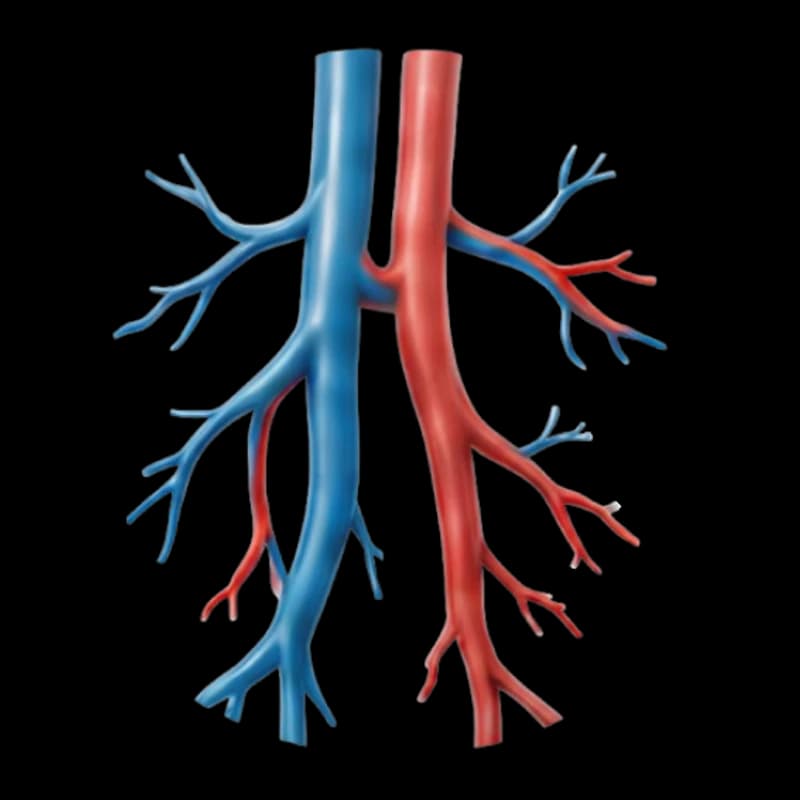
It helps to picture the plumbing. Arteries carry oxygen-rich blood away from the heart under pressure. Veins carry the used blood back, helped by tiny one-way valves that stop it from draining backwards down the legs. Trouble starts when arteries get narrowed or weakened, or when those vein valves fail — and because this network reaches every corner of the body, the problem can surface almost anywhere.
What I Treat as a Vascular Surgeon
My vascular practice covers a range of arterial and venous conditions, including:
- Varicose veins and chronic venous insufficiency (failing vein valves in the legs)
- Deep vein thrombosis (DVT) — blood clots forming in the deep veins
- Peripheral artery disease (PAD) — narrowed leg arteries causing pain, cramps, or non-healing wounds
- Carotid artery disease — narrowing of the neck arteries, a major cause of stroke
- Acute limb ischaemia — a sudden blockage of an artery or vein by a clot or embolus
The Procedures I Perform
Varicose vein laser (EVLT)
Varicose veins are swollen, twisted veins — usually in the legs — caused by faulty valves that let blood pool. Beyond how they look, they can ache, feel heavy, swell, and eventually change the skin. My preferred treatment is endovenous laser (EVLT): through a tiny puncture, I gently seal the faulty vein from within. It's a day-care procedure, minimal scarring, and most patients walk out and back to routine quickly.
Deep vein thrombosis (DVT) treatment
A DVT is a clot in a deep vein, most often in the leg — it can cause sudden swelling, pain, and warmth, and if a piece breaks off and travels to the lungs it becomes a dangerous pulmonary embolism. I usually start treatment with blood-thinning medication and compression, and in more severe cases use a catheter-based intervention to clear or dissolve the clot. Treating it promptly is what prevents the serious complications.
Peripheral artery bypass
When the arteries feeding the legs get badly narrowed by plaque (peripheral artery disease), the classic sign is cramping leg pain on walking — and in advanced cases, pain at rest, ulcers that won't heal, or worse. When it's advanced, I perform a bypass: I reroute blood around the blockage with a graft, restoring circulation to the limb and helping prevent tissue loss.
Carotid endarterectomy
The carotid arteries in the neck feed the brain, and when they narrow, the stroke risk climbs sharply. In a carotid endarterectomy, I open the artery and remove the plaque, restoring smooth flow and substantially cutting the stroke risk — alongside medication and risk-factor control.
Supporting evidence: Carotid endarterectomy significantly reduces stroke risk in patients with severe symptomatic carotid narrowing — in the NASCET trial (Barnett et al., NEJM 1998), the benefit of surgery for symptomatic stenosis of 70% or more was still present at eight years, and surgery gave a smaller benefit at 50–69% — NASCET follow-up (NEJM 1998)
Embolectomy / thrombectomy
When a clot or embolus suddenly blocks an artery, the limb is on the clock. Embolectomy and thrombectomy are operations to remove that clot and restore flow fast. Because these blockages are so time-critical, getting to surgery quickly gives the best chance of saving the limb.
Here's a quick overview of the vascular procedures I do most often:
Minimally Invasive or Open — How I Choose
Some vascular problems I can treat through tiny openings — laser for varicose veins, catheter-based treatment for deep vein clots — with less pain, minimal scarring, and a fast return to routine. Others genuinely need open surgery: a peripheral artery bypass, a carotid endarterectomy, or removing a sudden clot. There's no single “best” approach; the right one depends entirely on the condition, and I'll always tell you which is safest and most effective for your particular problem.
When Should You See a Vascular Surgeon?
Come and get assessed if you notice cramping leg pain when walking that eases with rest, prominent or painful varicose veins, persistent leg swelling or heaviness, leg ulcers or wounds that won't heal, or cold, pale, or discoloured feet. Catching these early often prevents them from progressing to something far more serious.
Seek emergency care immediately for sudden severe leg pain with coldness or loss of colour (a possible arterial blockage), sudden painful leg swelling (a possible DVT), or stroke symptoms such as face drooping, arm weakness, or slurred speech. These need urgent treatment — don't wait.
The Risks, Honestly
Vascular procedures are generally safe, and the minimally invasive ones in particular carry low short-term risk. As with any procedure, there's some possibility of bleeding, infection, or clotting. How well things go depends on the condition being treated, your overall health — diabetes and smoking matter a great deal here — and careful assessment beforehand. Choosing the right approach for each patient is what keeps the result safe and lasting.
Recovery
Recovery depends heavily on the procedure. Minimally invasive treatments like varicose-vein laser usually allow same- or next-day walking and a return to routine within days. Open procedures such as a leg-artery bypass or carotid surgery take longer, measured in days to weeks. Across all of them, the same habits protect the result: stay active, control blood pressure and blood sugar, don't smoke, and keep your follow-up appointments.
Keeping Your Vessels Healthy
Much of vascular disease responds to the very same habits that protect the heart: stay active, don't smoke, keep blood pressure, cholesterol, and diabetes under control, hold a healthy weight, and avoid sitting or standing still for long stretches. If you've already been treated, these habits matter just as much — they're what stop the problem coming back.
What Affects the Cost in Mumbai
The cost of treatment is not one fixed figure. It depends on you, on the treatment you need and on where you are treated. The main factors are:
- Hospital category. Charges differ between hospitals, for example between a large multi-speciality hospital and a smaller centre.
- Room type. A general ward, a semi-private room, a private room and a suite are charged differently, and so is time in intensive care.
- The graft, valve, device or implant used. The type used in your treatment can change the cost, for example the grafts used in bypass surgery, the valve chosen in valve surgery and TAVI, or the stent-graft used in some aortic repairs.
- Your condition and the treatment you need. A single planned treatment and a combined or more complex one are not priced alike.
- Length of hospital stay. A longer stay adds to the total.
- Tests and medicines. Investigations and medicines before, during and after the stay add to the total.
- Insurance and cashless admission. Whether your policy covers the procedure, what limits it sets, and whether the hospital offers cashless admission with your insurer, all affect what you pay yourself.
Because these factors are specific to each patient, a fair estimate is only possible after an evaluation, so no figure is given on this page. Ask the hospital for an itemised estimate before admission, and check with your insurer what your policy covers.
Frequently Asked Questions
Common clinical queries regarding the procedure and recovery.
It's generally well tolerated and done as day care. Most patients walk the same day and are back to routine within a few days, with minimal scarring.
It can be — if a clot travels to the lungs it causes a pulmonary embolism, which is serious. That's why sudden painful leg swelling should be assessed promptly.
Cramping leg pain on walking, cold or discoloured feet, and wounds that won't heal are common signs of peripheral artery disease and should be checked.
No — some, like varicose-vein laser and catheter-based DVT treatment, are minimally invasive with a fast recovery. Others, like artery bypass and carotid surgery, are open operations. I'll advise which suits your condition.
Often, yes — not smoking, staying active, and controlling blood pressure, cholesterol, and diabetes greatly reduce the risk.
Disclaimer: This guide is for general education and awareness and is not a substitute for professional medical advice. Please consult a qualified cardiac surgeon for guidance specific to your condition. If you'd like an expert opinion, you can consult Dr. Amjad Shaikh, a cardiac surgeon in Mumbai.
Need a second opinion before Vascular Surgery
Dr. Amjad Shaikh reviews, corrects and approves every article published in his name. Read our editorial policy
Dr. Amjad Shaikh
Cardiovascular & Thoracic Surgeon
M.Ch (CVTS), M.S., FMAS (Fellowship in Minimal Access Surgery), MBBS
Dr. Amjad Shaikh is an experienced cardiac surgeon in Mumbai with over 15 years of experience, specialising in heart bypass surgery, beating-heart CABG, valve repair and replacement, minimally invasive cardiac surgery, and heart transplants. He has been involved in 5,000+ cardiac surgical cases, including complex, high-risk cases.