
Heart Valve Surgery in Mumbai (Repair & Replacement): A Surgeon's Guide
Aortic, mitral & other complex heart valve procedures with advanced surgical care.

By Dr. Amjad Shaikh, M.Ch (CVTS)
Cardiovascular & Thoracic SurgeonLast reviewed 15 October 2026How we create our content
Overview
A heart valve is a simple thing with a demanding job: it's a one-way door that keeps blood moving in the right direction. When that door stiffens and won't open properly, or stops sealing and starts to leak, the heart has to work harder — and over the years, that extra work wears it down. My job is to fix the door before the heart pays the price.
Most of the valves I operate on are the aortic and the mitral — the two on the left side of the heart — though the tricuspid and pulmonary valves sometimes need attention too. Depending on your valve and your situation, I can either repair it or replace it, and I can do that through open surgery, a minimally invasive approach, or a catheter passed up from the leg. Let me walk you through how I think about all of it. Because I try to save a patient's own valve wherever I can, it's reasonable to want to know who will be making that call — my training and experience as a heart valve surgeon in Mumbai are set out here.
On treating heart valve disease early:
A diseased valve, treated at the right time, can give a patient their life back. My priority is always to act before the heart muscle is permanently damaged — because once heart failure sets in, we are playing catch-up.
The Four Valves, and What They Do
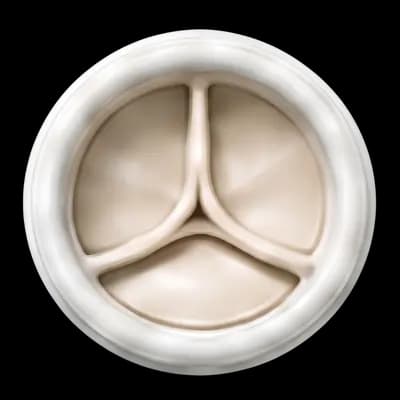
Think of the heart's valves as four one-way gates, each keeping blood moving forward through the chambers. The aortic valve, with three cusps, opens to let blood leave the left ventricle for the aorta and the rest of the body. The mitral valve, with two, lets blood pass from the left atrium into the left ventricle. Those are the two left-sided valves — the ones that carry the highest pressures and cause most of the trouble. On the right sit the tricuspid valve, between the right atrium and ventricle, and the pulmonary valve, which sends blood on to the lungs.
The Two Ways a Valve Fails
Valve disease really comes in two forms, and it helps to know which one you have. In stenosis, the valve narrows and won't open fully, so the heart has to force blood through a smaller gap — aortic stenosis and mitral stenosis are the common ones. In regurgitation, the valve won't close properly and blood leaks backward; this is the “leaky valve” you may have been told about. Some patients, unluckily, have both in the same valve.
Valve conditions I operate on
- Aortic stenosis
- Aortic regurgitation
- Mitral valve stenosis
- Mitral valve regurgitation (degenerative, rheumatic, or ischaemic)
- Tricuspid stenosis or regurgitation
- Pulmonary stenosis or regurgitation
- Combined mitral and aortic valve disease
What Causes Valve Disease — and Why India Is Different
Here in India, the story often starts in childhood. Rheumatic heart disease — the long-term damage left behind by rheumatic fever after a simple throat infection — is still the commonest cause of valve disease I see, and it usually strikes the aortic and mitral valves. What makes it different from the West is the age of my patients: I'm frequently operating on young and middle-aged people, not just the elderly.
Supporting evidence: South Asia carries a large share of the world's rheumatic heart disease. A Global Burden of Disease analysis (Watkins et al., NEJM 2017) estimated about 33 million people living with the condition in 2015, with the highest burden in Oceania, South Asia and central sub-Saharan Africa — Global Burden of RHD 1990–2015 (NEJM 2017)
The other causes look more like what you'd read about elsewhere. Degenerative disease shows up in older patients, where the valve either calcifies and stiffens or thins and leaks. Some people are simply born with a valve that will give way eventually — a bicuspid aortic valve is the classic example. And a smaller group develop valve trouble from a previous heart attack, an infection of the valve (endocarditis), or a weakened, enlarged heart.
Rheumatic vs degenerative disease on the operating table:
Rheumatic valves are usually fibrosed, damaged, and sometimes calcified, whereas degenerative valves — seen in older patients — tend to have thin leaflets that leak. The big difference is age: rheumatic disease affects the young, degenerative disease the elderly. Because rheumatic leaflets are so thickened and damaged, they more often need replacement; if the valve is repairable we always try to repair first, but in rheumatic cases the results of repair are often not as good, so a badly damaged valve is replaced.
The Warning Signs — and Why People Ignore Them
Valve disease is patient. It builds slowly, and its first signs — tiredness, a little breathlessness — are so easy to blame on age or a busy life. As it worsens, you notice breathlessness climbing stairs, then chest tightness, giddiness, even loss of appetite. The problem I see again and again is that people arrive only after heart failure has already set in. By then I'm repairing damage that didn't have to happen.
Why patients delay, and why it's risky:
Most patients delay valve surgery hoping it can be managed with medicines or a smaller treatment. But as we delay, the heart enlarges, the chambers keep getting bigger, and this can become a permanent enlargement (cardiomegaly) with repeated heart failure. Delay can also turn a normal rhythm into atrial fibrillation, which may stay permanent even after surgery and carries a lifetime risk of stroke. So valve surgery should be done as early as possible — and there's no need to fear it, because it's very safe now, by open or minimally invasive approaches.
How I Confirm the Diagnosis
It often starts with a stethoscope. A murmur — and the particular sound of it — tells me which valve is likely misbehaving. But the test I really rely on is the 2D echocardiogram, an ultrasound of the heart with Doppler flow. It shows me exactly how tight or leaky the valve is, whether the damage looks rheumatic or degenerative, and how the heart muscle is coping. Where I need a closer look, a transoesophageal echo (a probe passed down the food pipe) gives me an even clearer picture before I plan anything.
Watch: a real operation

Triple Valve Heart Surgery — Aortic and Mitral Replacement, Tricuspid Repair, and Left Lung Bullectomy, performed by Dr. Amjad Shaikh. A complex case like this shows what's possible when valve surgery is done well — there's no better demonstration than the operation itself.
How Valve Surgery Is Done
Open-heart valve surgery
For many valves, this is still the standard, and it's a well-trodden path. You'll have blood tests, an echo, and a chest X-ray beforehand, and I stop your blood thinners four days ahead. You carry on with normal life until admission, usually the day before, with six hours of fasting before surgery.
In theatre, you're fully asleep. I open the chest through the midline, dividing the breastbone, and place you on the heart-lung machine so I can stop the heart safely with a protective solution. Then I open the affected chamber and repair or replace the valve. Once it's done, the heart is restarted, the breastbone closed, and you go to the cardiac ICU where you're watched very closely.
How long in hospital? A typical open valve operation means six to seven days with us — about three in the ICU, then three or four on the ward. Most patients are up and walking the day after surgery.
Minimally invasive valve surgery
For many mitral and aortic valves, I can now work through a small incision on the side of the chest without ever dividing the breastbone. The payoff for you is real: a smaller scar, less pain, a shorter stay, and a quicker return to normal life. It's especially welcome for younger patients — and, I'll say frankly, for many of my female patients, for whom the cosmetic result matters a great deal. You can read more about how I choose this approach on our Minimally Invasive Cardiac Surgery page.
Transcatheter valve (TAVI / TAVR)
For the aortic valve, TAVI lets me replace it without opening the chest or stopping the heart at all — I pass a new valve up through the artery in the leg and deploy it under X-ray. It's mainly for severe aortic stenosis, typically in older patients (usually over 70), those unfit for open surgery, or those carrying other serious illness. Many go home in about three days, often without needing general anaesthesia. Read more about TAVI procedure.
A few honest caveats on TAVI: the valve and procedure cost considerably more than conventional surgery; only tissue valves can be used, so it suits older patients better; and there's a somewhat higher chance of needing a permanent pacemaker afterwards.
Emerging techniques
Robotic-assisted valve surgery, mostly for mitral repair, is an advancing field aiming for very high precision through keyhole access — developing steadily as the technology and training mature.
Matching the approach to the patient:
Not every patient needs their chest opened. With minimally invasive and catheter-based options, I can match the approach to the patient — often a smaller scar, less pain, and a faster return home.
Repair or Replace? The Decision I Care About Most
When I open a valve case, the first question in my mind is always: can I save this patient's own valve? Where I can repair, I usually will. For a narrowed valve, that can mean freeing up cusps that have fused. For a leaky one, I trim the damaged tissue, re-suture the leaflets, and often add fine artificial cords (neochordae) and a supporting ring to hold the repair.
The echo largely decides it for me. In degenerative disease, if the leaflets are still soft and healthy, repair is usually possible — and better, because nothing beats a patient's own living valve. In rheumatic disease, where the leaflets are thickened and scarred, I can attempt a repair, but the results often don't hold, so a badly damaged valve is better replaced. I'll also replace when there's an active infection on the valve, or when a patient would simply rather not risk needing a second operation later.
Supporting evidence: In the MIDA registry of patients with degenerative mitral regurgitation and a flail leaflet (Lazam et al., Circulation 2017), 20-year survival was 46% after repair versus 23% after replacement (41% vs 24% after matching), with fewer reoperations and valve-related complications — Mitral repair vs replacement — MIDA registry (Circulation 2017)
Why I fight to repair:
Whenever a valve can be repaired rather than replaced, I prefer to repair it. A patient's own repaired valve is a natural, native valve — it often serves them better and can avoid a lifetime of blood thinners. In young women of childbearing age who want to conceive, especially, I lean towards repair wherever the valve allows it.
Mechanical or Tissue Valve? How I Guide the Choice
When a valve must be replaced, we come to a decision that shapes the rest of your life, and I never rush it. It comes down mostly to age and circumstances. A mechanical (metal) valve lasts a lifetime but commits you to lifelong blood thinners. A tissue valve frees you from those thinners, but wears out in roughly 10 to 15 years. As a rule of thumb, I lean mechanical under 60 and tissue over 60 — but the rule bends for the person in front of me.
Counselling a young woman planning a family:
Our rule is straightforward: a tissue valve above 60 years of age, a metallic valve below 60. A metallic valve lasts long but needs blood thinners like acitrom or warfarin; a tissue valve needs none, but lasts only around 10 to 15 years. So for a young woman of childbearing age who wants to conceive, we avoid the metallic valve and choose a tissue valve — and I always explain clearly that she may need another surgery after 10 to 15 years, once her family is complete. That honest conversation is part of the decision.
The Risks, Told Straight
Valve surgery is well established and, in experienced hands, very safe — but every big operation carries some risk and you deserve to hear it plainly. The possibilities are bleeding, infection, an irregular rhythm (particularly atrial fibrillation), and, less often, stroke. A few patients need a permanent pacemaker — slightly more so after TAVI. And if you receive a mechanical valve, you'll take lifelong blood thinners that need regular monitoring to stay in the safe zone. What keeps these risks low is choosing the right patient, operating before the heart is badly weakened, and following you closely afterwards.
Recovery and Life Afterwards
After a routine open valve operation, most patients are back to normal activity in about 20 days and driving after a month. If I've done it minimally invasively, that's quicker — often routine life in around 15 days. And the bigger picture is genuinely encouraging: get the surgery at the right time, before the heart muscle is damaged, and most patients go on to live a full, normal life.
A note on blood thinners and follow-up. If you have a mechanical valve, the anticoagulant is non-negotiable, and you'll need a PT/INR blood test roughly every 45 days to keep the dose right — often we can review this over the phone. I see patients at one month, three months, and six months, then yearly. Watch for breathlessness, swelling of the feet, or nosebleeds, and tell me early if they appear.
Recovery Roadmap: Open vs. Minimally Invasive vs. TAVI
Recovery is quickest with TAVI (no chest incision, usually no general anaesthesia), then minimally invasive, then open surgery. Treat this as a general guide — every patient heals at their own pace.
What Affects the Cost in Mumbai
The cost of treatment is not one fixed figure. It depends on you, on the treatment you need and on where you are treated. The main factors are:
- Hospital category. Charges differ between hospitals, for example between a large multi-speciality hospital and a smaller centre.
- Room type. A general ward, a semi-private room, a private room and a suite are charged differently, and so is time in intensive care.
- The graft, valve, device or implant used. The type used in your treatment can change the cost, for example the grafts used in bypass surgery, the valve chosen in valve surgery and TAVI, or the stent-graft used in some aortic repairs.
- Your condition and the treatment you need. A single planned treatment and a combined or more complex one are not priced alike.
- Length of hospital stay. A longer stay adds to the total.
- Tests and medicines. Investigations and medicines before, during and after the stay add to the total.
- Insurance and cashless admission. Whether your policy covers the procedure, what limits it sets, and whether the hospital offers cashless admission with your insurer, all affect what you pay yourself.
Because these factors are specific to each patient, a fair estimate is only possible after an evaluation, so no figure is given on this page. Ask the hospital for an itemised estimate before admission, and check with your insurer what your policy covers.
Frequently Asked Questions
Common clinical queries regarding the procedure and recovery.
It largely comes down to age: mechanical under 60, tissue over 60. A young woman planning a family may choose tissue to avoid lifelong blood thinners.
No. Catheter-based TAVI isn't, and many valves can now be done minimally invasively. But traditional replacement does mean stopping the heart and opening the chamber.
Usually some, depending on your heart. The big difference is anticoagulation — a mechanical valve needs lifelong blood thinners; a tissue valve generally doesn't.
A mechanical valve is permanent. A tissue valve typically lasts about 10 to 15 years, after which another procedure may be needed.
Yes — if the surgery is done in time and your heart function is preserved, most patients live entirely normally.
The heart can enlarge permanently and slide into heart failure, and the rhythm can turn into atrial fibrillation that persists even after surgery and carries a lifelong stroke risk. That's why I push for timely surgery.
Blood thinners are usually stopped four days before, on my advice.
After open surgery, normal activity at about 20 days and driving after a month. After minimally invasive surgery, work in about 15 days.
At one, three, and six months, then yearly — with a PT/INR check about every 45 days if you're on blood thinners, often by phone.
Yes — breathlessness, swelling of the feet, or nosebleeds. Report them promptly.
Disclaimer: This guide is for general education and awareness and is not a substitute for professional medical advice. Please consult a qualified cardiac surgeon for guidance specific to your condition. If you'd like an expert opinion, you can consult Dr. Amjad Shaikh, a cardiac surgeon in Mumbai.
Need a second opinion before Heart Valve Surgery?

Dr. Amjad Shaikh reviews, corrects and approves every article published in his name. Read our editorial policy
Dr. Amjad Shaikh
Cardiovascular & Thoracic Surgeon
M.Ch (CVTS), M.S., FMAS (Fellowship in Minimal Access Surgery), MBBS
Dr. Amjad Shaikh is an experienced cardiac surgeon in Mumbai with over 15 years of experience, specialising in heart bypass surgery, beating-heart CABG, valve repair and replacement, minimally invasive cardiac surgery, and heart transplants. He has been involved in 5,000+ cardiac surgical cases, including complex, high-risk cases.